Free shipping in all of Morocco.

Whey Protein vs Hydrolyzed Protein: Which One Should You Choose?

If you work out in Morocco, you’ve seen whey protein everywhere. It’s in gyms, pharmacies, and online. This is because it helps you meet your daily protein needs without extra cooking. It’s great for both newbies and seasoned gym-goers, helping repair muscles and grow them steadily.

The selection can be overwhelming. This guide simplifies the main types: whey concentrate, whey isolate, and hydrolyzed whey. Choosing between whey protein and hydrolyzed depends on your stomach, goals, and budget.
whey protein vs hydrolyzed protein

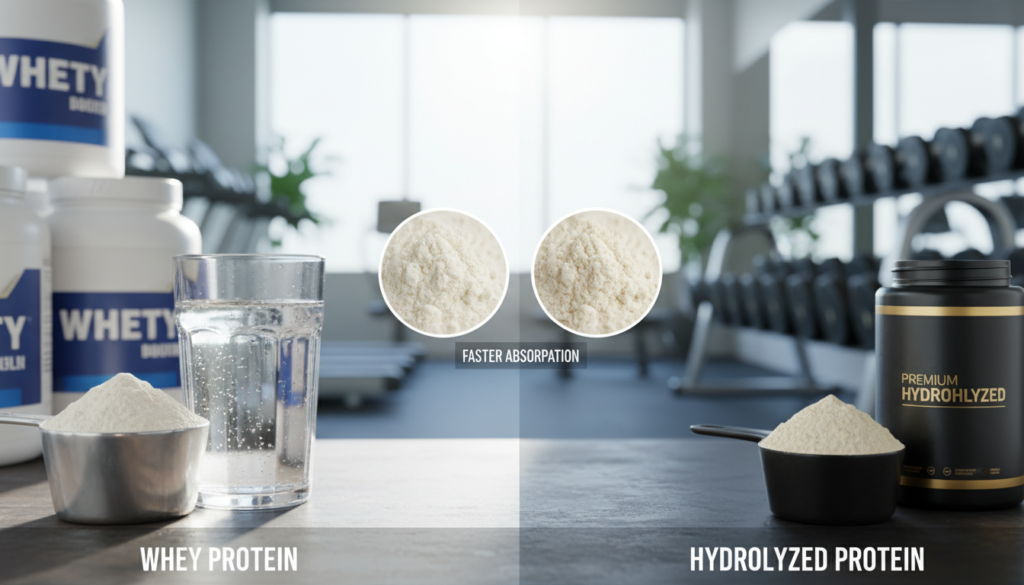
Think of it as a ladder of processing. Moving from whey concentrate to isolate to hydrolyzed means more protein, less carbs and fat, and less lactose. You might notice changes in taste, mixing, and label cleanliness, which is important when looking for protein powder in Morocco.

Hydrolyzed whey is marketed as fast-absorbing, but whey is already quick. In practice, hydrolyzed might only be a bit faster than isolate. Taste can be a trade-off, as more hydrolysis can make it bitter, which brands often mask with flavors and sweeteners.

Cost is also a factor in Morocco’s sports nutrition scene. Concentrate is the budget-friendly option, isolate is a step up but affordable, and hydrolyzed is the priciest. The best whey protein for muscle growth depends on your total protein intake, training, and recovery.

This article is for educational purposes only, not medical advice. If you have health concerns or milk allergies, consult a healthcare professional before using supplements.

Key Takeaways

  • The main whey options are whey concentrate, whey isolate, and hydrolyzed whey.
  • Choosing between whey protein and hydrolyzed depends on protein percentage, digestion, and cost.
  • Whey concentrate vs isolate vs hydrolyzed means lower lactose and higher purity as processing increases.
  • Hydrolyzed whey may be fast-absorbing, but whey isolate is already quick for most.
  • Taste can vary; hydrolyzed whey can be more bitter than isolate or concentrate.
  • For those shopping for protein powder in Morocco, the best value depends on budget, tolerance, and label clarity.

Whey Protein and Hydrolyzed Whey: What They Are and Where They Come From

If you’ve ever wondered, what is whey protein, it’s a key protein in milk. It contrasts with casein, making up the two main proteins in milk. Whey is the liquid part, while casein thickens and sets.

In Morocco, the journey of whey protein begins in dairy processing. This process transforms milk into cheese, explaining why whey ends up in your protein shakes.

Whey vs casein in milk and how cheese-making separates them

Milk naturally has more casein than whey. Cheese making uses an enzyme to create cheese making whey. This enzyme, often rennet, causes the milk to set into rennet casein curds.

The curds become the cheese base. The leftover liquid, whey, is rich in protein, lactose, minerals, and water. This liquid is the foundation for most whey supplements.

How liquid whey becomes protein powder through straining, heating, filtration, and drying

Many ask how whey protein is made from the liquid. First, the liquid is strained to remove solids. Then, it’s heated and processed to concentrate the protein and improve safety.

Next, filtration concentrates the protein by removing lactose and fat. Drying turns the concentrated whey into a stable powder that mixes well.

The three main whey forms on labels: concentrate, isolate, and hydrolyzed (whey hydrolysate)

Once whey is powdered, you’ll see three types. Concentrate is less filtered, keeping more of the milk’s components. Isolate is more filtered, increasing protein and reducing lactose.

Hydrolyzed whey has its protein structure changed. If you’re curious about whey hydrolysate meaning, it’s whey broken into smaller peptides. These variations aren’t separate products but different refinements of whey.

  • Whey protein concentrate: retains more of the original whey.
  • Whey protein isolate: has more protein, less lactose and fat.
  • Hydrolyzed whey (whey hydrolysate): broken down into smaller pieces.

Comparing protein types: Whey Concentrate, Whey Isolate, and Hydrolyzed Whey

When you’re shopping in Morocco, the labels can seem like a secret code. You often face a big choice: whey concentrate vs isolate vs hydrolyzed. Each one suits different needs, budgets, and routines.

Think of it in three simple categories: WPC vs WPI vs WPH. They all come from whey but differ in processing. This changes their nutrients, taste, and cost.

whey concentrate vs isolate vs hydrolyzedwhey concentrate vs isolate vs hydrolyzed

Whey concentrate (often listed as WPC) is the most common and affordable choice. It’s great for those who do well with dairy and don’t mind a bit more lactose and carbs.

But, WPC can vary a lot in protein percentage. So, always check the nutrition panel to meet your daily protein goals.

Whey isolate (WPI) is processed to remove more fat and carbs. It usually has 90%+ protein by weight, with very low lactose. This is good for those who get upset by milk sugar.

WPI is often cleaner and feels lighter after drinking. It’s a top pick for those who want more protein per scoop without extra calories.

Hydrolyzed whey (WPH) is made from isolate and broken down further. This creates smaller protein pieces for easier digestion. It’s often more expensive due to the extra processing.

Hydrolyzed whey is usually labeled as “whey hydrolysate” or “hydro whey.” It’s a WPH style.

Tri-blend whey formulas mix concentrate, isolate, and hydrolyzed in one product. THE Whey is a good example, marketed for training and post-workout use.

Blends offer a middle ground on cost, texture, and comfort. They’re a simple way to try different protein types without sticking to just one.

Nutrition Profile and Label Reading for Whey vs Hydrolyzed Protein Powders

When reading protein powder labels, remember: a scoop isn’t always the same. Brands use different sizes and formulas. So, the only fair way to compare is by looking at the serving size on the label. In Morocco, where prices vary a lot, checking the numbers first helps you avoid paying for fillers.

Protein concentration and what you get per scoop

Whey protein nutrition facts show a clear pattern. Whey concentrate usually has 50%–80% protein by weight. Whey isolate and hydrolyzed options are tighter and higher in protein.

Hydrolyzed whey macros can be similar to isolate. This is because many hydrolyzed products start as isolate. Hydrolysis breaks protein into smaller peptides, but it doesn’t automatically increase the protein grams on the label. What matters is how the product was filtered and how much flavoring was added.

Carbs, fat, and lactose: what changes and what doesn’t

Filtration is key to lower carbs and fat. When whey powder is filtered further to make isolate, it removes more non-protein parts. This often means lower lactose content whey, which is a big comfort upgrade for many.

Hydrolysis only works on the protein portion. It doesn’t remove carbs, fat, or lactose. So, if a hydrolyzed formula was made from an isolate base, its lactose content is often low. This comes from the isolate step, not hydrolysis.

Real-world macro examples and why they vary

Even within the same category, brands don’t match perfectly. One label may show 0 g carbs and 0 g fat, while another shows 1–2 g. These differences often come from the degree of filtration, added cocoa, creamers, or flavor systems.

  • Illustrative per 20 g serving: Whey isolate: 72 calories, 17 g protein, 1 g carbs, 0 g fat, 80 mg calcium
  • Illustrative per 20 g serving: Hydrolyzed whey: 73 calories, 15 g protein, 2 g carbs, 1 g fat, 80 mg calcium

When comparing whey isolate macros and hydrolyzed whey macros, always look at serving size, total calories, and the ingredient list. Don’t just look at the product name on the tub.

Ingredient and quality checks that matter

After looking at the numbers, scan the ingredient list for clarity. Look for whey protein concentrate (WPC), whey protein isolate (WPI), whey protein hydrolysate (WPH), or a blend. Blends can be useful, but they can also explain why carbs, fats, and lactose aren’t as low as expected.

For quality, look for a third-party tested protein powder claim and a clear testing approach on-pack. Many shoppers prefer grass-fed whey for sourcing and brand transparency. If sweeteners are included, watch out for how many are stacked, as hydrolyzed formulas often need stronger flavor masking.

Digestion, Absorption Speed, and Tolerability: Is Hydrolyzed Whey Actually Better?

If a protein powder makes you feel heavy or upset your stomach, the label is key. In Morocco’s heat, mixing whey with water is common. This makes taste and texture very important. Hydrolyzed and isolate products get a lot of attention here.
hydrolyzed whey digestion

Hydrolysis explained

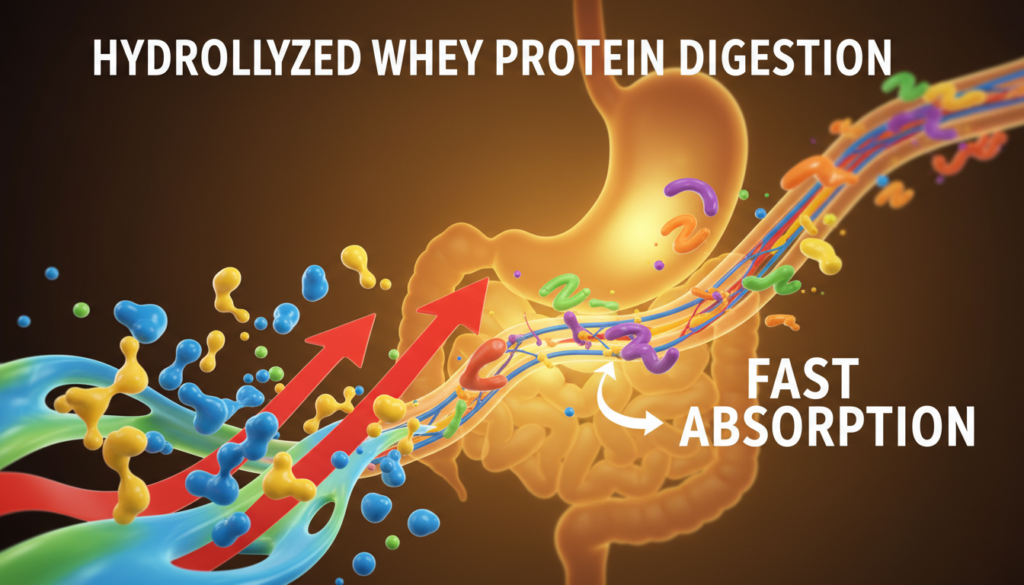
Hydrolysis breaks down proteins into smaller chains using heat, acid, or enzymes. It’s thought to make digestion easier for your gut. But, your body must finish the digestion process.

Absorption reality check

Whey is known for quick absorption compared to whole foods. Hydrolyzed and isolate digestion speeds are similar. The difference is small, unless you’re not getting enough protein all day.

How much a protein is hydrolyzed also affects taste and benefits. Too much processing can harm flavor and effectiveness.

Bitterness and palatability

The bitter taste of hydrolyzed whey is real. Smaller peptides can taste sharp. Brands often use strong sweeteners to mask this.

Whey isolate is often smoother and cleaner. It’s better for clear, fruity mixes. It leaves less aftertaste, making it great for lemon or berry flavors.

Lactose sensitivity and digestive comfort

Most stomach issues with whey come from lactose and additives, not the protein. Concentrate has more lactose, causing bloating and gas in some.

For those with lactose intolerance, whey isolate is a better choice. Hydrolyzed whey is also low in lactose. But, always check the label for “low lactose” or “lactose-free” accuracy.

Allergy considerations

A milk allergy is different from lactose sensitivity. It’s an immune reaction to milk proteins, even in small amounts.

Some consider hydrolyzed whey for milk allergies because it’s broken down. But, it’s milk-derived. Always talk to a doctor before trying new powders.

Choosing the Best Option for Your Goal and Budget in Morocco

Finding the best whey protein in Morocco starts with two key questions: your goal and your stomach. The price of protein powder in Morocco can vary a lot. This depends on the store, size, and type of protein. So, it’s wise to compare labels carefully.

For strength training, most whey proteins work well if you stick to your plan. Whey isolate is often used in research for muscle gain. It provides all nine essential amino acids and BCAAs, with leucine helping with muscle building and recovery.

If you’re trying to lose fat, the type of whey you choose matters. Whey for fat loss is about keeping track of daily calories. A 2019 study found that whey can help with weight loss. Many choose isolate or hydrolyzed for their lower carb and fat content.

When it comes to post-workout timing, the debate is ongoing. But, daily protein and diet quality are more important than the exact timing of your shake. Hydrolyzed whey is popular for its quick absorption, even though whey is already fast to digest.

Budget is a big factor in your decision. Concentrate is usually the cheapest, isolate is in the middle, and hydrolyzed is the most expensive. This explains why hydrolyzed whey is pricier.

  • Concentrate: good for everyday bulking, but protein content varies.
  • Isolate: higher purity, better for those watching macros.
  • Hydrolyzed: best for those who want fast absorption and easy mixing.

When shopping locally, focus on the details. Look at the protein percentage and whether it’s 100% isolate or a blend. Compare the macros of each serving. If you have digestion issues, check if the whey is lactose-free.

Taste is important too. Hydrolyzed whey can taste bitter and may have stronger flavors. Isolate often tastes cleaner. Choose products that are third-party tested and have clear labeling, including grass-fed options.

Conclusion

Choosing the right protein type depends on what you value most: cost, taste, or how it digests. All whey proteins have all nine essential amino acids and digest well. So, pick the one you can stick with every day.

In the debate between whey concentrate and isolate, concentrate is often cheaper and easier to find. But it may have more lactose and carbs. Isolate, on the other hand, is usually 90%+ protein, with less fat and lactose. It also tastes cleaner, which many prefer.

When comparing whey isolate to hydrolyzed whey, hydrolyzed whey is broken down into smaller peptides. This might make it easier on your stomach. It’s also the priciest and can taste bitter. A tri-blend like MYPROTEIN THE Whey offers a good balance of cost, taste, and comfort.

When shopping for protein powder in Morocco, match the product to your goals. Consider lactose tolerance, flavor, and budget. If you’re allergic to milk, hydrolyzed whey might be better. But always check with a doctor first. Make sure to check the macros, blend transparency, and any testing claims to ensure it fits your fitness plan.
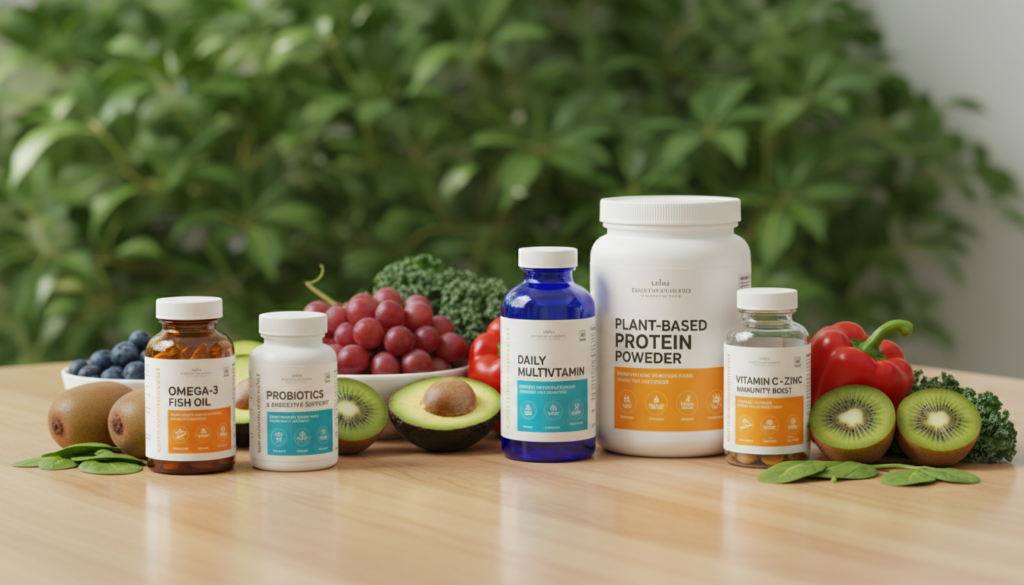

Top 5 Supplements Worth Your Money

When you walk into a pharmacy in Casablanca or browse a Moroccan marketplace, you’ll see lots of supplements. This guide aims to help you find the best food supplements in Morocco. It’s about finding value without getting caught up in hype.

The supplement industry is huge, with people spending about $60 billion a year in the U.S. on supplements. That’s about $175 per person. Yet, many supplements lack solid evidence. So, looking for value should be your first step, not last.

In this article, we focus on supplements that are worth it. These include vitamin D, psyllium fiber, fish oil/omega-3s, magnesium, and protein powder. If you’re looking for supplements that are practical and effective, these are good choices.

You won’t find trendy supplements like alpha-lipoic acid or muscle-builders like creatine here. We focus on supplements backed by solid evidence. This makes it easier to choose the right ones for you.

Our credibility comes from UCHealth Today and experts like Erin “Wren” Cahoon and Mahtab Jafari. They help us guide you in choosing the best supplements in Morocco. We aim to give you a clear view of what’s worth your money.

best food supplements

Key Takeaways

  • This Morocco-focused review highlights best food supplements with the most practical, everyday benefits.
  • Spending is high, but strong proof is not—so aim for supplement value for money, not bold claims.
  • The five picks are vitamin D, psyllium fiber, fish oil/omega-3s, magnesium, and protein powder.
  • Many popular “anti-aging” and “muscle-builder” products are excluded to keep this list tight and useful.
  • This is centered on evidence-based supplements, with safety and common-sense buying priorities.
  • If you want high-value supplements, start with products that solve a clear need and fit your diet.

How to Choose High-Value Supplements in Morocco

Finding the best food supplements in Morocco can seem easy at first. But, when you examine labels, claims, and serving sizes closely, it’s not that simple. A good choice is about evidence, not just promises. It’s also about finding something that fits well into your daily life.

Remember, invest in quality checks, not in exaggerated claims. This way, you spend your money wisely and ensure safety when comparing different products.

Look for third-party testing labels like NSF and USP for dosage and purity

Look for third-party tested supplements on the bottle. NSF certified and USP verified labels are signs of quality. They ensure the product’s identity, purity, and correct dosage.

These labels help when comparing similar products at various stores. They reduce the uncertainty of blends, mega-doses, and “proprietary” formulas.

Understand that dietary supplements aren’t FDA-approved like medications

Unlike prescription drugs, supplements aren’t reviewed by the FDA before sale. So, it’s up to you to check labels, ask questions, and choose brands that share quality standards.

When issues arise, action often comes after products are sold. This knowledge helps you shop more wisely and avoid buying on impulse.

Prioritize food first with a balanced plate (fruits, vegetables, beans, nuts, seeds, whole grains, lean proteins)

For the best value, focus on food. A balanced diet with fruits, vegetables, beans, nuts, seeds, whole grains, and lean proteins is key. It provides most of what your body needs before adding supplements.

If you do choose supplements, use them to fill specific gaps. This approach helps you spend less and use what your body can benefit from.

Know the common risks: label inaccuracy, contamination, and interactions with prescription medicines

Even well-known products can vary more than expected. Always view the label as a starting point, not a promise. Be cautious of contamination risks, like with fish oil, botanicals, and some powders.

Also, be aware of interactions with prescription drugs. This is critical if you take medications for blood pressure, diabetes, thyroid issues, or blood thinners. Discuss your entire list of medications, including herbs and “detox” products, with a pharmacist or doctor.

  • Check the basics: one active ingredient when possible, clear dosage, and simple directions.
  • Avoid risky categories: products for quick weight loss, sexual enhancement, or extreme muscle gain.
  • Match the form to your needs: capsules for steady dosing, powders only when you can measure accurately.

Vitamin D Supplements for Bone Health and Mood Support

In Morocco, many people spend a lot of time indoors. This can affect how much sun they get. So, many look for a reliable vitamin D supplement for their daily health.

vitamin D for mood support

Why vitamin D is worth it: helps absorb calcium for bones and teeth

Vitamin D helps your body use calcium better. This is key for strong bones and teeth. If you don’t get enough sun or vitamin D, your bones might suffer.

Some also believe vitamin D can help with mood. This makes it a top choice for those focusing on bone health and mood.

Who may benefit most: older adults, people with limited sun exposure, and those at risk of deficiency

Some groups are more at risk for low vitamin D. Older adults and people with darker skin need more sun to make vitamin D.

Those who spend a lot of time indoors also face a higher risk. Jobs that keep you inside, or always wearing sunscreen, can lead to deficiency.

  • Older adults, including many people over 75
  • People with chronic health issues that affect absorption
  • Anyone indoors most of the day, including students and office workers

Typical dosing ranges mentioned in guidance: 600 IU under age 71, 800 IU after; many experts suggest 800–1,000 IU (upper safe limit often cited as 4,000 IU/day)

Guidelines suggest 600 IU for adults under 71 and 800 IU for those older. Many doctors recommend 800–1,000 IU daily, based on diet and sun exposure.

When looking at supplements, remember to check for vitamin D3. It’s often preferred. Taking up to 4,000 IU daily is usually safe, but more can be risky.

Smart usage tip: take with a meal that contains some fat; consider a blood test (commonly cited target level: at least 30 ng/mL)

Vitamin D works better with fat. So, take it with a meal that has some fat, like olive oil or eggs. This can help a lot over time.

Getting a vitamin D blood test can also help. Aim for a level of at least 30 ng/mL. This can guide whether you need a regular dose or a quick fix.

Psyllium Fiber as a Prebiotic for Digestion and Cholesterol Support

If your diet lacks beans, veggies, and whole grains, you might not get enough fiber. In Morocco, many people turn to psyllium husk as a simple way to boost their fiber intake. They add it to tea, yogurt, or smoothies.

Psyllium is great for digestion when used correctly. It helps maintain regular bowel movements. Many use it for constipation caused by travel, stress, or eating less fiber.

Why it’s worth it

Psyllium turns into a soft gel when mixed with water. This gel helps move food through your system smoothly. It’s perfect for those who struggle to eat enough fiber during busy days.

It works well with foods like lentils, oats, and nuts. If you can’t get enough fiber from food alone, a supplement can help. It makes it easier to stay regular without changing your diet drastically.

Prebiotic angle

Some fibers feed good gut bacteria. Psyllium is often talked about with other prebiotics like inulin. These are great for better digestion and less bloating over time.

  • Tip: Mix thoroughly and drink another glass of water after, so the fiber can do its job comfortably.
  • Easy use: Stir into oatmeal, blend into a berry-and-spinach smoothie, or whisk into plain yogurt.

Potential heart-health perk

Psyllium may also help your heart. It can lower cholesterol levels. Many people see this as a benefit when they use it daily with a low-fat diet.

This is why it’s in products like Metamucil. You can find these brands in many Moroccan stores and pharmacies.

How to start

Start small. Begin with a small dose for a few days. Then, gradually increase it as your body gets used to it.

  1. Begin with half a serving mixed into plenty of water.
  2. Increase gradually every few days if you feel comfortable.
  3. Separate fiber from prescription meds by a couple of hours if you can.

If you prefer a familiar format, Metamucil is a good starting point. When shopping locally, look for psyllium husk products that taste good and mix well.

Fish Oil and Omega-3s for Triglycerides and Heart Health

When looking for heart health supplements in Morocco, omega-3s are often a top choice. It’s important to understand their benefits and who they’re best for.

Why it’s worth it

Omega-3s are great for lowering triglycerides. They also provide DHA, which is why many products highlight it. This makes them a good choice for those with high triglyceride levels.

For many, fish oil acts as a supplement when seafood isn’t a regular part of their diet.

Who it’s for

People who don’t eat fish regularly can benefit the most from omega-3 supplements. If you already eat fish like sardines or salmon, you might not need extra capsules.

For those who avoid fish, algae DHA vegan options are a good choice. They provide DHA without using marine products. Many prefer them for their taste and dietary fit.

Quality and safety notes

Quality is key. Even if a bottle is within date, some softgels can go rancid. This can cause a strong smell or taste, often due to heat or light exposure.

It’s also wise to watch your cholesterol levels. Some people check their LDL after starting fish oil, as reactions can differ.

Buying guidance

Before buying, check the label for omega-3 breakdowns. Look for clear DHA numbers if that’s what you’re after. This helps compare fish oil products with algae DHA vegan options.

  • If you want omega-3s without extra vitamin A, skip fish liver oil and choose a regular fish body oil instead.
  • Store capsules in a cool, dry place to help lower the odds of rancid fish oil smell or taste.

Magnesium Supplements for Migraines and Common Shortfalls

Magnesium is often overlooked until headaches start to disrupt our lives. In Morocco, it’s mentioned alongside other supplements for headaches. But it’s important to understand its limitations.

Why it can be worth it

For those with frequent migraines, magnesium is a practical option. It affects nerve signals and blood vessel tone. This is why it’s often used in migraine treatments.

But magnesium is also touted for sleep and muscle cramps. While these benefits sound appealing, the evidence isn’t always solid. It’s wise to keep expectations realistic.

Who may be low

Magnesium deficiency is widespread, even with seemingly healthy diets. Older men, those with gastrointestinal issues, and type 2 diabetics are at higher risk.

Before turning to supplements, check your diet. Beans, lentils, nuts, seeds, whole grains, leafy greens, and fortified foods can boost your magnesium levels.

Form matters

Stomach issues are a common reason people stop taking magnesium. At high doses, it can cause a laxative effect, similar to milk of magnesia.

If you want a supplement that’s easier on the stomach, magnesium glycinate is a good choice. It’s known for being gentler, making it easier to maintain a regular routine.

Protein Powder for Meeting Daily Protein Needs and Healthy Aging

Protein powder can be a quick fix when meals get boring. It’s easy to add to breakfast, a post-workout drink, or even oats. But remember, whole foods are the main source of nutrition.

Keep a mix of beans, nuts, fish, egg whites, tofu, and lean meat on hand. Use protein powder for a quick energy boost. Many in Morocco compare whey to plant protein, looking for taste, digestion, and cost.

protein powder Morocco

Why it’s worth it

Protein powders can help if you can’t get enough protein from food. They’re great on busy days when cooking is hard.

Think of them as a supplement, not a meal replacement. This keeps your diet full of fiber, vitamins, and minerals.

Baseline needs

A good starting point for daily protein is 0.34 grams per pound of body weight. For a 150-pound person, that’s about 50 grams.

This amount is similar to what you get from a 6-ounce chicken breast. A small shake can fill the gap when you’re short on protein.

Higher needs with training and age

If you’re active or trying to build muscle, you might need 50% more protein. That’s why many gym-goers choose whey protein Morocco for convenience.

As we age, our bodies might not keep muscle as well. Older adults might benefit from a steady protein intake throughout the day.

Safety and label notes

Always check the ingredients list. Some people avoid erythritol protein powder due to health concerns. Erythritol has been linked to heart issues and blood clots.

It’s also important to watch out for lead in protein powder. Some products have been found to have high levels of lead. Choose brands that publish quality tests.

  • Scan for simple formulas with clear serving sizes and fewer additives.
  • Consider third-party testing for purity and heavy metals when available.
  • Check medication fit if you take prescriptions or manage kidney or liver issues.

Use it effectively

Don’t overdo it with protein in one sitting. Research shows that eating too much can be less effective. For a 150-pound person, that’s about 27 grams at a time.

Instead, spread out your servings across meals. This approach works whether you prefer plant protein or whey.

Conclusion

Looking for the best food supplements? Look for clear, evidence-based benefits. Vitamin D is great for bone health and for those who don’t get enough sun. Psyllium fiber is simple to use and helps with regularity, gut health, and cholesterol.

Fish oil and omega-3s are good for the heart, lowering triglycerides and adding DHA. Magnesium is useful for migraines and common diet shortfalls. Protein powder is handy for daily needs, with training, busy lives, or aging.

But, a smart guide for buying supplements in Morocco starts with caution. Choose safe, third-party tested supplements with NSF or USP labels. Remember, supplements aren’t regulated like medicines, so quality can vary.

Be wary of high fraud risk products, like those for sexual performance or weight loss. Always check with a doctor or pharmacist if you’re on prescription medicine. Used right, supplements can help, but they’re not a replacement for a balanced diet or medical care.

5 Signs You Have a Vitamin D Deficiency

In Morocco wellness circles, “get more sun” sounds like simple advice. But low vitamin D can sneak up on you, and it’s easy to overlook. The Endocrine Center explains that vitamin D isn’t like other nutrients. It acts more like a hormone, activated by your kidneys.

vitamin D deficiency signs

Many people don’t notice vitamin D symptoms at first. Mindy Lacey, MD, says most patients with deficiency don’t show symptoms. So, early signs are often mistaken for stress, aging, or just being busy. In older adults, these signs can be very subtle and easily missed.

This guide will help you spot five key signs: fatigue, muscle weakness, bone or back pain, frequent colds, and mood swings. These symptoms can also be signs of other conditions. A vitamin D blood test is the quickest way to find out for sure.

Once you recognize these patterns, you can explore ways to boost your levels. You can try food, sunlight, or a vitamin D3 supplement. Supplements are usually safe at the right doses. But, Dr. Lacey warns about side effects like constipation and dry mouth. High doses can cause nausea, vomiting, confusion, and even kidney stones. Always check with a doctor before starting or changing supplements.

Key Takeaways

  • Low vitamin D can be hard to notice because many people have mild or no vitamin D symptoms.
  • Common vitamin D deficiency signs include fatigue, muscle weakness, bone or back pain, frequent illness, and mood changes.
  • In older adults, low vitamin D may look like “normal aging,” so patterns matter.
  • A vitamin D blood test helps confirm whether symptoms are tied to low vitamin D or something else.
  • Food and sunlight help, but many people also consider a vitamin D3 supplement for steady support.
  • Take supplements safely: high doses can be harmful, and interactions with medications are possible.

Why Vitamin D Deficiency Happens More Than You Think in Morocco

It seems simple: Morocco has sun, so people should have enough vitamin D. But, vitamin D Morocco labs often show a different story. The problem isn’t just the sun, but how often your skin gets the right light.

Daily habits play a big role. A busy life indoors, long commutes, and time behind glass can reduce exposure. Even sunny days might not provide enough vitamin D.

Vitamin D acts like a hormone and is produced after UVB sun exposure

Vitamin D is more like a hormone than a regular vitamin. Your skin makes it after UVB sunlight triggers a chemical change. This process depends on timing, season, and how much skin is exposed.

Age also affects vitamin D levels. Older adults, with thinner skin and less time outside, may struggle to get enough. Health issues and some medicines can make it harder too.

Food typically provides only a small share of your daily vitamin D needs

Eating well helps, but it’s not enough. The Endocrine Society says most people get only about 10% of their needs from food. Even fortified foods like dairy and cereals can’t make up for it.

The daily recommended amount is 600 IU for adults 19–70 and 800 IU for those over 70. These numbers help you understand how much you need when looking at labels or your daily meals.

Why “plenty of sun” doesn’t always mean adequate vitamin D levels

Being outside a lot doesn’t always mean you get enough vitamin D. Sunscreen and vitamin D are connected because strong protection can block UVB. Many also avoid peak sun to prevent burns and aging.

Skin tone also plays a role. Darker skin makes vitamin D slower because more melanin blocks UVB. So, longer exposure is needed. Add covered clothing, shade, or pollution, and the gap grows.

  • Higher-risk groups include those with obesity, osteoporosis, and malabsorption disorders like celiac disease or inflammatory bowel disease.
  • People who spend most of their day indoors, like seniors, may have lower intake and weaker absorption due to changes in appetite.

vitamin D Basics: What It Does and Where It Comes From

Ever wondered, what does vitamin D do? It’s like a messenger in your body. It turns into the calcitriol hormone, helping many systems work well. In Morocco, even sunny days don’t always mean you have enough vitamin D.

Bone and muscle support through calcium absorption and muscle contractions

Vitamin D is key for calcium absorption in your gut. This helps keep your bones and teeth strong. Without enough, your bones can weaken over time.

It also helps your muscles work right, keeping you steady and moving smoothly. Without enough, you might get osteomalacia, a condition that makes your bones soft.

Immune and mood support linked to neurotransmitters like serotonin and dopamine

Vitamin D boosts your immune system, helping fight off germs. That’s why low levels are linked to getting sick more often.

It also affects your mood, thanks to its role in serotonin and dopamine. This is why it’s called the “sunshine vitamin” and linked to feeling good.

Common dietary sources: fatty fish, egg yolks, and fortified staples

Food can help, but it’s not always enough. Good sources include fatty fish like salmon and mackerel. Egg yolks and beef liver also have some vitamin D.

Many people also use fortified foods vitamin D like milk and cereals. Even some plant-based drinks, like soy milk, can help.

When looking at supplements, you might see vitamin D2 vs D3. Both work, but D3 is often used because it’s more effective.

Sign You Might Be Low: Fatigue That Doesn’t Improve With Rest

In Morocco, long days and busy lives can make anyone tired. But feeling tired from vitamin D is different. It sticks around even after a good night’s sleep and a light day.

How low vitamin D can affect cellular energy and daily stamina

Vitamin D plays a big role in our energy levels. When it’s low, our body’s energy production slows down. This can slowly take away our usual energy.

You might notice it in small ways. A short walk feels harder, simple chores take longer, and you need more breaks than usual.

When persistent tiredness should prompt a vitamin D blood test

If you’re tired all the time, it might be worth getting a vitamin D test. Mindy Lacey, MD, suggests testing for vitamin D when fatigue is paired with low mood or bone issues. A simple blood test can show if your vitamin D levels are okay or too low.

  • Tired most days, even after rest
  • Low drive with work, school, or exercise
  • A heavy, “run-down” feeling that doesn’t match your routine

Fatigue in older adults can be subtle and mistaken for “normal aging”

Older adults often feel tired without realizing it. Many think it’s just part of getting older. They might blame it on stress, sleep, or other health issues.

Low vitamin D can also cause widespread aches that drain your energy. Some people feel sore in the shoulders, pelvis, ribcage, or lower back. This pain and tiredness can be hard to spot in older adults.

Sign You Might Be Low: Muscle Weakness, Aches, or Cramps

Feeling strong one day and weak the next can be puzzling. Many in Morocco report sore muscles without any change in their routine. This could hint at vitamin D muscle weakness.

Small signs often start and grow over time. You might find you tire in your legs faster or struggle with simple tasks.

vitamin D muscle weakness

Why this can affect strength and comfort

Vitamin D helps your body use calcium, key for muscle function. Low levels can cause muscles to work poorly. This might feel like muscle aches or a lingering soreness after light activity.

Some people also experience sudden muscle tightness, often at night. These vitamin D cramps can affect the calves or feet, making sleep tough.

Why it matters more with age

In older adults, weakness can change daily life quickly. Less stable legs can increase the risk of falls, even during simple tasks. If a fall occurs, the risk of fractures grows, as bones and muscles work together.

This is why families often take weakness in parents and grandparents seriously, even if it seems minor.

Clues people notice first

  • Heavy legs that make walking feel like effort
  • Trouble standing up from a chair without using your hands
  • Difficulty climbing stairs or stepping onto a curb
  • Muscles that feel sore or tender for no clear reason

If muscle discomfort or weakness persists and you can’t link it to exercise, illness, or medication, talk to a doctor. Bringing a list of symptoms can make the visit more productive.

Sign You Might Be Low: Bone Pain, Back Pain, or Higher Fracture Risk

When vitamin D levels drop, bones may not get the minerals they need. This can lead to vitamin D bone pain that feels deep and dull.

Back pain from vitamin D deficiency often shows up in the lower back and hips. It can happen after long days or even a simple walk.

At the heart of the issue is calcium absorption vitamin D. Without it, the body might take calcium from bones. This can lead to low bone density over time.

In severe cases, osteomalacia can occur. People may feel tenderness on the ribs or shins. They might also feel like their body is worn out.

  • Bone aches that linger for weeks
  • Back stiffness that doesn’t match your activity level
  • More pain with simple movements like bending or lifting groceries

For older adults in Morocco, muscle weakness can add to the problem. This makes balance harder. It’s important to prevent fractures, even more so for those with osteoporosis or a history of falls.

If you’re dealing with low bone density, talking to a doctor is key. They can help with testing and a plan that fits your lifestyle. This way, you can prevent bone pain and fractures before they disrupt your life.

Sign You Might Be Low: Frequent Colds or Getting Sick More Easily

Feeling like you’re always getting sick? It might not just be bad luck. In Morocco, many people spend a lot of time indoors, covered up or behind glass. This can quietly affect how well vitamin D supports your immune system.

frequent colds vitamin D

Vitamin D’s role in supporting immune defenses against common infections

Vitamin D helps your body make peptides that protect your nose, throat, and lungs. When levels are low, germs can hit harder. Some notice a link between flu and vitamin D deficiency in winter and early spring, when UVB exposure drops.

Patterns to watch: repeatedly catching “every cold going around”

Do you catch every cold at work, school, or on public transit? If you keep getting sick year after year, it’s worth checking. You might notice longer recovery times, lingering coughs, or back-to-back sore throats.

  • Colds that return soon after you felt better
  • More sick days than usual compared with family or coworkers
  • Illness that feels stronger than it used to

When to talk to a clinician about screening

If this pattern keeps repeating, talk to your doctor next time. A simple vitamin D screening test can show if your level is low or healthy. It’s even more important if you also have fatigue, muscle weakness, or bone pain.

Risk is higher for older adults who rarely go outside. It’s also higher for people with malabsorption issues like celiac disease or inflammatory bowel disease. In these cases, repeated infections can be a bigger warning sign, not just a rough season.

Sign You Might Be Low: Mood Changes, Low Mood, or Depression-Like Symptoms

If you feel off for weeks, it might not be just stress. You might notice irritability, a flat mood, or sleep changes without reason. In Morocco, even on bright days, indoor work, sunscreen, and covered clothing can affect vitamin D levels.

Vitamin D mood swings can show as impatience, sudden sadness, or feeling overwhelmed. These feelings can also be signs of vitamin D and depression, making you feel heavy and hard to explain.

Why it’s called the “sunshine vitamin” and how it relates to serotonin

Vitamin D is made in the skin with UVB light. So, less sun can be a problem. Inside, vitamin D acts like a hormone and turns into an active form that affects brain signals. This includes serotonin.

Low serotonin signals can make you feel unmotivated or unsteady. You might also want carbs more or pull away from friends. These signs can be linked to vitamin D and depression but are hard to spot.

In older adults, mood changes may overlap with fatigue and cognitive concerns

In many families, low mood in older adults is seen as just aging. But mood changes can mix with tiredness, poor sleep, and less interest in daily life. This mix raises questions about older adults cognitive decline vitamin D risk.

If someone seems tired and down most days, it’s important to talk about it at a checkup. A simple blood test can show if vitamin D is involved.

Seasonal shifts and low sunlight exposure as a practical clue

If symptoms get worse in winter or when you’re indoors a lot, season might be a clue. Some studies link seasonal affective disorder vitamin D with lower vitamin D levels. Short days, cloudy weeks, and staying inside can all play a part.

Watch for mood dips that follow the calendar. If you notice vitamin D mood swings and low drive, ask your doctor if checking vitamin D levels is a good idea.

Conclusion

Feeling tired, having muscle aches, or experiencing bone pain could mean low vitamin D. These symptoms can sneak up on you, even in busy Morocco. A simple blood test can help figure out what’s going on.

Start with a vitamin D blood test at a place like The Endocrine Center. Dr. Lacey can also offer advice. Then, try to boost your vitamin D with foods like salmon and fortified cereals.

Getting some sun is good, but don’t overdo it. Sunscreen helps protect your skin but can also block vitamin D. In Morocco, the sun’s effect changes with the seasons and your skin type.

If food and sun aren’t enough, talk to a doctor about supplements. Vitamin D3 is often better than D2, and cod liver oil is another choice. But be careful: too much can cause problems like kidney stones.

Why Recovery Is More Important Than Your Workout

If you train hard but feel stuck, the problem might not be your workout plan. It could be how well you recover. Many active people in Morocco fitness push themselves too hard, then wonder why they don’t get better.

UCHealth experts often say the same thing: rest is key. Jessica Yeaton at the UCHealth SportsMed Clinic and Dr. Karin VanBaak at the CU Sports Medicine & Performance Center say recovery is simple but vital. It’s when your body fixes itself and gets stronger.

workout recovery

This review looks at magnisium & melatonin, popular sleep supplements. They’re marketed for athlete recovery because sleep quality affects how you perform the next day. But, recovery supplements aren’t magic. They can’t fix a chaotic routine.

Whether you’re a student athlete, a weekend lifter, or getting back into training later in life, recovery is personal. This guide will cover the basics that matter most—sleep, stress, warm-ups and cool-downs, active recovery, and fueling—then show where magnisium & melatonin may fit.

Key Takeaways

  • Workout recovery is when your body does the work of rebuilding and muscle repair.
  • UCHealth clinicians link better results to better recovery habits, not just harder sessions.
  • magnisium & melatonin are often sold as sleep supplements because sleep drives next-day performance.
  • Recovery supplements can support a solid routine, but they won’t replace sleep, food, and stress control.
  • These principles apply across Morocco fitness, but your ideal recovery plan depends on your life and training load.
  • This product review will focus on practical levers first, then evaluate how sleep aids might help.

Recovery is where the real gains happen, not during training

Hard training is just the start. Recovery is where the real growth happens. When you train hard, your body breaks down tissue. Then, during rest, it rebuilds it stronger.

Good recovery makes your next workout feel easier. You can see your progress more clearly.

Muscle repair and growth happen during rest and sleep after microscopic muscle tears

Strength training causes tiny muscle tears. This happens when you lower weights slowly or train at long lengths. Dr. Karin VanBaak says the workout is just the start. The real repair happens later.

Sleep is key for muscle growth. At night, your body fixes tissues and balances hormones. This helps your muscles recover well with your training.

Recovery is the process of reducing fatigue and returning to baseline (or better) performance

In sports science, recovery is more than just resting. It’s about reducing fatigue first. Then, you adapt to perform better in your next session.

Training hard, like to failure, or doing lots of volume, needs more recovery time. This helps protect your strength and performance.

Under-recovery can temporarily reduce force output and performance and raise injury risk

Not enough recovery can quickly lower your performance. You might do reps slower or move clumsily. It can also increase injury risk.

Too much training can lead to longer recovery times. This might make your next workout less effective, even if you’re eager to start.

Stress, cortisol, and why “more workouts” can backfire

Hard training might seem good, but your body only counts the total load, not just gym time. This can make cortisol and exercise a tricky mix, adding to life’s stress.

In Morocco, people often face long commutes, family duties, and late work hours. High stress athletes might add more sessions without realizing they’re already drained.

cortisol and exercise

Training stress stacks with life stress

Life stress and training add up like weights on the same bar. Work pressure, school deadlines, and relationship tension all stress your body must handle.

High cortisol levels can make you finish a workout but never feel fully relaxed. Jessica Yeaton at UCHealth says this steady stress state can slow down the rest and digest phase, where repair happens.

When you can’t shift into recovery mode

If you can’t get into rest and digest mode, healing slows down. This can affect your immune system recovery, increase illness risk, and make strength harder to access.

Planning lighter days is just as important as planning hard days. A simple reset can be a true rest day, an easy session, or a short break that lets your system settle.

Common signs you need rest

Overtraining signs often show up as patterns, not one bad day. A performance dip lasting a week to a month is a classic red flag.

  • Persistent fatigue that doesn’t match your sleep
  • Unexplained drop in performance or pace
  • Lingering aches and pains, tightness, or heavy legs
  • Sleep disruption, agitation, or mood changes
  • Poor appetite, more frequent colds, or feeling “run down”
  • Higher resting or workout heart rate, and higher perceived effort

VanBaak notes that once overtraining syndrome sets in, it can be hard to unwind. About 60% of elite athletes and 30% of non-elite endurance athletes are affected, showing mood disturbance, dehydration risk, lower libido, and increased body fat.

For high stress athletes, the goal is not to fear training. It’s to match intensity to the week you’re actually living, so cortisol and exercise don’t stay stuck on “on.”

Sleep quality: the most overlooked performance tool for athletes and busy adults

Training breaks you down a little; sleep builds you back up. For many athletes and busy adults in Morocco, sleep quality for recovery is the habit that slips first, even when workouts stay on track.

When your nights get chopped up, your body pays for it the next day. Focus fades, reaction time slows, and small mistakes show up in warm-ups, lifts, and long runs.

Sleep supports tissue repair, hormone regulation, immune function, and mood

During deep sleep, the body shifts into maintenance mode. That’s when muscle tissue rebuilds, soreness settles, and immune defenses recharge.

Sleep also helps steady mood and decision-making, which matters when training stress meets work, school, and family demands. Keeping sleep quality for recovery consistent can make hard sessions feel more manageable.

Sleep loss can drag endurance and disrupt hormones

Research connects sleep deprivation and endurance with a real drop in aerobic output. You may feel it as heavier legs, faster breathing, and a shorter fuse when pace climbs.

There’s also a hormone angle: cortisol and sleep are tightly linked, and short nights can keep cortisol higher. At the same time, growth hormone repair can be blunted, which is a rough combo when you’re trying to heal and adapt.

That fatigue can raise injury risk, too. When you’re low on sleep, poor timing and sloppy form show up at the worst moments.

Sleep hygiene that actually helps

  • Keep the room cool and dark to reduce wake-ups and make sleep feel deeper.
  • Make your bed a sleep-only zone: avoid work, scrolling, or watching TV in bed.
  • Go screen-free as you wind down, specially right before lights out; simple sleep hygiene tips like this are easy to repeat.
  • Stick to a steady routine, even on weekends, because inconsistent schedules can chip away at sleep quality for recovery.

Sleep needs are personal, but families can use the American Academy of Pediatrics ranges as a guide: ages 6–12 need 9–12 hours, and ages 13–18 need 8–10 hours per night.

If you’re exploring melatonin sleep support, treat it as a helper, not a replacement for the basics above. The best results come from a consistent routine that protects sleep quality for recovery.

Active recovery, warm-ups, and cool-downs that improve how you feel tomorrow

Feeling better tomorrow often starts before you even begin. A good dynamic stretching warm-up and a cool-down walk can make a big difference. It’s like a circulation recovery that keeps your body moving, even on busy days.

active recovery

Dynamic stretching sets the tone before you train

A dynamic stretching warm-up uses full-range moves that match your workout. It wakes up your nervous system and boosts blood flow. This makes you feel more coordinated and ready to go.

Light movement after hard work helps you rebound

After intense effort, it’s important to move. A short cool-down walk keeps muscles active and supports recovery. It helps move waste out of worked tissue.

It also helps separate sensations. The burning feeling during hard intervals is often from lactic acid buildup. Next-day tenderness is more about muscle damage. Gentle movement, food, and time tend to work better than staying static.

Simple active recovery options that don’t drain you

Good active recovery raises your heart rate a bit but avoids repetitive patterns. It delivers oxygen and nutrients to muscles, tendons, and ligaments.

  • walking
  • brisk walking/jogging
  • swimming/aquatic activity
  • cycling/stationary cycling
  • elliptical or rowing machine
  • light weightlifting using 30%–40% less weight than usual

Programming can be simple, too. Easier sessions like training opposing muscle groups or light aerobic work can act as active recovery. Even a short training pause before a priority workout can be enough.

Stretching and rolling: use what helps you feel better

Static stretching can feel relaxing, but its performance payoff is not always clear. The same goes for foam rolling soreness. If it helps you unwind and move with less stiffness, it’s usually a good add-on.

If you like cold plunging, keep expectations realistic. Some people use it after hard sessions, and it may reduce markers tied to lactic acid buildup. But it’s not required for solid circulation recovery. For many athletes, 5–10 minutes of easy movement plus a steady cool-down walk does more for how the body feels the next morning.

magnisium & melatonin: product-review guide for better nighttime recovery

Training is like sending a signal, and sleep is the response. Magnisium & melatonin help because sleep is when our bodies fix muscles, balance hormones, support the immune system, and improve mood.

Looking at sleep supplements is all about practicality. They’re tools to help, not a replacement for good training, enough food, and a regular bedtime.

Why sleep-focused supplements get attention

Poor sleep makes training harder and less sharp the next day. It also raises stress, slowing down recovery and making focus harder.

Magnesium and melatonin are key because they work during sleep, not during workouts. This is when our bodies do most of the repair.

What to look for on a label

Stick to simple, clear, and consistent labels. The best supplements are easy to use every night.

  • Clear dosing for each ingredient, with a serving size that makes sense
  • Third-party tested supplements with published batch testing or a visible certification mark
  • Simple formulas that avoid long “proprietary blends” and heavy stimulant add-ons
  • Consistent-use guidance so timing and expectations are easy to follow

In Morocco, check local availability and import rules before buying. Choose brands that share testing documents and full labels, as quality can vary.

Who may benefit most

These supplements are great for those with lots of stress from training, work, school, or family. A calm pre-bed routine is as important as the supplement itself.

Endurance athletes might also benefit, as sleep loss can lower aerobic output. And if your schedule is unpredictable, consistency is key.

How to fit them into a full routine

Begin with a simple recovery stack: a cool, dark room, less phone time before bed, and a consistent wind-down. Supplements work best when the basics are in place.

Match your sleep plan with post-workout nutrition. Eat within two hours of training, with protein for repair and carbs for glycogen replenishment.

This combo supports insulin response, speeding glycogen storage and recovery. A bit of fat may slow digestion but usually doesn’t cancel benefits.

If soreness and fatigue keep building, review your training plan. Frequent failure sets, high volume, and hard lower-body work increase recovery needs, even with good sleep support.

Conclusion

Exercise breaks you down, but recovery is when you repair and rebuild. To perform better in workouts, rest is essential. It’s as important as the workout itself.

Skipping recovery means stress stays high and cortisol lingers. This makes it hard to heal and can increase injury risk. It also makes you weaker in the gym, even when you’re trying hard.

A good recovery starts at night. Keep your room cool and dark, avoid screens before bed, and follow a routine. Add active recovery like warm-ups and easy walks to help your body.

Remember, rest days are important. Some people need one day off every 7-10 days, while others prefer two. Don’t forget to eat enough and balance your diet. Carbs help you recover faster.

If sleep is a problem, consider magnesium and melatonin. But they work best when you have good sleep habits and a balanced routine. This includes smart training, active recovery, and real rest days.

Best Time to Take Protein: Before or After Workout

If you’re into lifting, running, or gym workouts, you’ve probably wondered: should you drink a protein shake before or after? The answer isn’t simple because everyone’s routine and goals are different. Some want to boost muscle recovery, while others aim for muscle growth.

protein timing

Here’s what most people need to know: research shows that when you consume protein isn’t as important as getting enough protein overall. What’s key is meeting your daily protein needs to help with strength and nutrition during workouts.

This guide also focuses on practical advice. We’ll compare different protein types like whey, casein, egg, soy, and rice/pea blends. We’ll consider your lifestyle, digestion, and training in Morocco. You’ll learn when it’s best to have a shake at home, at the gym, or as a quick snack.

Before we start, a quick tip: be careful of websites that seem official but are just ads. If a page is mostly ads or loading scripts, it’s not helpful for workout or supplement info.

Key Takeaways

  • For most gym-goers, protein timing matters less than total daily protein.
  • A protein shake can work before or after training if it fits your schedule.
  • Whey protein is popular because it mixes fast and is easy to drink around workouts.
  • Comfort matters: some people train better with food in them, others prefer lighter options.
  • In Morocco, planning ahead can help—mix at home, pack a shaker, or use shakes between meals.
  • The best plan is the one you can repeat, supporting muscle recovery and muscle growth.

Protein timing basics: what actually drives results

Protein timing can seem tricky, like when Ramadan or busy weeks in Morocco come up. But, the truth is, most results come from simple habits, not exact timing.

Daily protein intake and regular workouts are key, not just one perfect moment. Smart meal choices can help with recovery and performance too.

muscle protein synthesis

Why protein matters for muscle repair and growth

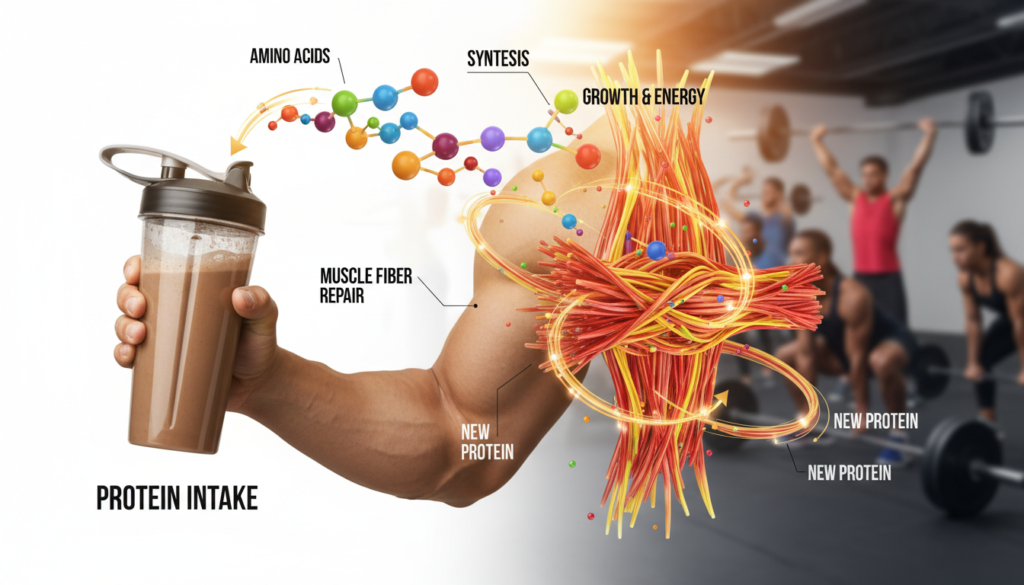
Hard workouts cause tiny muscle tears. Your body uses protein to fix these, making muscles stronger over time.

This fixing process relies on muscle protein synthesis. Enough amino acids help your body repair after lifting.

So, strength training protein is a useful tool, not just a trend. Food is effective, and shakes can be helpful when you’re in a rush or not hungry.

What the research says about timing vs total daily intake

Many studies show daily protein intake is more important than when you drink a shake. Timing helps, but can’t replace enough protein on a low day.

Research on whey timing around workouts is mixed. Some see benefits, while others do well as long as they get enough protein daily.

Think about “coverage” instead. Spread protein across meals for steady muscle protein synthesis support, not just one big dose.

How workout context affects timing choice (fed vs fasted training)

Your meal timing before lifting changes things. In fed vs fasted workouts, being “fed” means you’ve had nutrients from a recent meal.

With fasted training, like early morning workouts before breakfast, whey timing is more important. A quick shake after can help bridge to your next meal.

Choose what works for you: a meal you digest well, a shake you can handle, and a plan that keeps daily protein steady with your strength training goals.

Does the “anabolic window” after training really exist?

In many gyms, like those in Casablanca and Rabat, the anabolic window is a big topic. It’s the idea that you need to eat quickly after working out. But, real life isn’t always that simple. What you eat before your workout can affect how you refuel.

anabolic window

Where the 30-minute rule came from

The 30 minute anabolic window idea started because muscles were seen as “like a sponge” after exercise. It was thought that you had to eat protein fast to “lock in” muscle gains.

Some say missing this window means your body won’t use protein for building muscle. This led to the idea that a protein shake after working out is essential, even if you’ve already eaten.

What newer studies suggest about a longer (or flexible) window

Recent studies suggest the muscle recovery window is longer than 30 minutes. It’s now seen as more flexible, lasting up to two hours after working out.

This view also matches how digestion works. Amino acids stay in your blood for a while, thanks to protein in your last meal. So, it’s not about racing against the clock. It’s about fitting protein into your daily routine.

Practical takeaway: what to do if you can’t drink a shake right away

If you can’t get a protein shake right after working out, don’t worry. Think in terms of meals, not minutes. It’s better to have steady protein throughout the day. Then, fit in post workout protein when it works for you.

  • Pack a simple option like a shelf-stable shake or yogurt for the commute.
  • Use normal food if it’s easier: eggs, milk, sardines, chicken, lentils, or a tuna sandwich.
  • Plan your next meal so you support muscle recovery without feeling rushed.

Before vs after workout: what studies show and what to choose

Choosing between protein before or after a workout can be tough. The best choice is often the one you can stick to every week. This helps match your workout timing to your daily routine in Morocco, whether it’s after work or in the morning.

Key study snapshot: 25 g whey before vs after with 10 weeks of training

A study on whey protein involved 21 men. They were split into two groups. Both groups took 25g whey, but at different times.

One group drank it before training, like a pre-workout shake. The other group had it after. They did full-body training three times a week for 10 weeks. This simple plan made it easy to compare the two timing options.

Real-world decision factors: convenience, digestion comfort, schedule

If a shake makes you feel uncomfortable before working out, try it after. Whey protein is fast-digesting, so it works well either way. It depends on how your body handles it.

  • Convenience: pick the timing that fits your busy days.
  • Digestion: if pre-workout shakes upset your stomach, go for after.
  • Schedule: match your shake with when you can eat.

When “after” may be preferable (fasted training, long gaps between meals)

Training on an empty stomach? Protein after your workout is a good choice. A post-workout shake is also helpful when you won’t eat for a while, like during travel or a busy day.

In these situations, 25g whey after your workout can be a practical solution. It keeps your routine simple and supports your habits without adding stress.

How much protein you need per day and how to spread it out

If you train regularly, your diet should be consistent too. Most progress comes from daily protein intake and making smart choices every week.

RDA vs strength-training needs

The RDA is about 0.8 g/kg, but it’s not enough for lifters. A better goal is 1.6 g/kg protein for recovery and muscle growth.

Tracking protein per kg makes your plan flexible, whether you’re in Casablanca or Rabat. Knowing your target makes it easier to meet it with regular meals.

Example calculation and a simple way to hit it

A 150 lb (68 kg) person aiming for 1.6 g/kg protein needs about 109 g daily. You can get this from chicken, fish, eggs, dairy, beans, and lentils. Add more when meals are short.

Don’t want to count all day? Create a routine menu. Use the same breakfast, a similar lunch, and change dinner proteins.

Protein distribution that fits real life

Don’t save all your protein for dinner. Many people eat light breakfasts and then load up at dinner.

A good plan is 3–4 meals every 3–4 hours. Aim for 25–30 g per meal to keep your intake steady without feeling full.

Shakes between meals and around training

Shakes can fill the gap between meals, perfect for busy days. Most powders have 25g to 30g protein per scoop, making it easy to fill gaps without eating a full meal.

  • Between meals: use a shake when hunger hits early, so you don’t arrive at dinner starving.
  • Near workouts: pair protein with carbs if you want a more complete post-training snack.

Choosing a powder: quick, slow, and plant options

Whey and casein powders differ mainly in digestion speed. Whey is quick, while casein is slow, fitting better before long breaks.

Egg white powder is in the middle for digestion but is often pricier. Soy is a complete plant option, and blends like rice and pea can provide essential amino acids without dairy.

Safety notes to keep in mind

For healthy adults, high protein diets are usually safe when coming from normal foods and supplements. But, those with kidney disease or advised to limit protein should be cautious.

Bone health is also a concern. Higher protein diets can be good for bone health with resistance training. If you have health concerns, talk to a doctor before increasing your protein intake.

Conclusion

The best time to take protein is not as complex as fitness ads suggest. Studies show that pre and post workout protein lead to similar gains. What really matters is meeting your daily protein goal with quality meals.

Protein shake timing is more flexible than the old 30-minute rule. A shake after training is convenient but not essential. For many, getting protein within two hours supports recovery and muscle repair.

When picking a powder, think like a consumer, not a scientist. Whey is best for quick digestion before workouts. Casein digests slower, great for night. Egg protein is in the middle, and soy or rice/pea blends are good for plant-based diets.

For most healthy adults, more protein is safe and may even help bones with smart training. Use shakes to supplement, not replace, real food. Always watch your total protein intake. If you have health conditions, talk to a doctor before increasing your protein.

How to Use Creatine Monohydrate for Maximum Muscle Growth?

If you train hard but feel stuck, creatine monohydrate might be the simple upgrade you need. It’s known to boost performance in high-effort workouts, quick sprints, and faster recovery. For many, this means more quality time in the gym and better muscle growth over time.

Don’t make the mistake of using creatine only sometimes. Daily use is key to muscle saturation, not just a few scoops here and there. When your muscles are always topped up, it’s easier to see strength and muscle gains each week.

creatine monohydrate

This guide is like a practical playbook for creatine use. It focuses on what really works, backed by the International Society of Sports Nutrition (ISSN). Experts like Jose Antonio, Ph.D., and Darryn Willoughby, Ph.D., are referenced, along with classic research by Harris et al. (1992).

It also helps you choose a Morocco supplement that fits your budget and stomach. There’s no one-size-fits-all approach. Some prefer a quick loading phase, while others go for a steady daily dose to avoid stomach issues. The goal is the same: consistent creatine use for better training quality and progress.

Key Takeaways

  • creatine monohydrate works best when taken consistently to build and maintain muscle saturation.
  • More high-quality work in resistance training can support muscle growth, strength gains, and hypertrophy over time.
  • There are multiple dosing paths, including loading and low-dose daily use, and both can be effective.
  • Timing matters less than consistency, but workouts and meals can affect how creatine fits your routine.
  • Choosing a clean, straightforward Morocco supplement label helps you avoid paying for extras you don’t need.
  • This article will cover selection, dosing, timing, and safety using evidence from ISSN and major research reviews.

Creatine Monohydrate Basics for Muscle Growth

If you’ve ever wondered what is creatine, it’s a natural compound your body makes and gets from food. It’s made from amino acids and is key for quick energy during workouts.

Before diving into scoops and timing, understanding how your body uses it is important. This knowledge makes the next steps easier and more practical.

What creatine is and where it’s stored in the body

Creatine is mainly made in the liver and kidney from amino acids. You also get it from meat and fish. So, daily omnivorous diet creatine intake is real, but usually small.

About 95% of creatine is in your muscles. Inside those cells, your muscle creatine stores are mostly free creatine and phosphocreatine. A small amount is in tissues like the brain.

How creatine supports high-intensity training through ATP-PC energy

During high-intensity exercise, your muscles need energy fast. That’s where phosphocreatine helps, quickly rebuilding ATP through the creatine kinase reaction.

This quick energy refill is the ATP-PC system. It supports short bursts like hard sets, sprints, and repeated efforts. This helps keep your training quality high throughout the workout.

Why omnivorous diets may leave muscle creatine stores only partially full

For many, omnivorous diet creatine intake is about 1–2 grams per day. Yet, muscle creatine stores are often only 60% to 80% full. This leaves room to increase saturation.

How much room you have can vary. Factors like baseline levels, type II fiber size, age, and current training influence your response to increased creatine intake.

Choosing the Right Creatine Supplement for Results

Finding the right creatine product should be easy, not a puzzle. The best creatine monohydrate is one you can take daily, measure quickly, and trust for quality. For many, this means a simple tub of creatine monohydrate powder without extra ingredients.

best creatine monohydrate

Why creatine monohydrate is the most studied and evidence-backed form

Creatine monohydrate is the top choice because it’s been studied the most. It’s also used in classic loading plans that spread out daily doses. This history is key if you want a supplement that matches what science has proven.

More expensive blends might not offer more usable creatine. For steady gym progress, a simple creatine monohydrate powder focuses on consistent intake and effort.

How absorption works and what “near-100% absorption” means in practice

After mixing and drinking, creatine is absorbed into your bloodstream. Creatine monohydrate is known for near 100% absorption. This means most of what you take is used, not wasted.

Success often depends on sticking to a routine, not on fancy versions. A common 5 g daily dose is used in many muscle-building protocols.

What to look for on labels when buying in Morocco (purity, simplicity, servings)

When buying creatine in Morocco, the label should make dosing easy. Look for clear purity, serving size, and refill math. Be wary of pre-workouts with creatine but unclear amounts, as they won’t help with steady muscle saturation.

  • Ingredients: 100% creatine monohydrate powder, with minimal additives or sweeteners.
  • Serving size: clearly listed (often 3–5 g), so daily use is simple.
  • servings per container: printed in large, readable text to compare value.
  • Transparency: avoid “proprietary blends” that make the creatine dose unclear.

creatine Dosing Protocols for Maximum Muscle Saturation

The goal is simple: increase creatine and phosphocreatine in your muscles. This helps with hard workouts and quick recovery. It supports repeated sprints, heavy lifts, and steady gym progress.

Dosing is key. Your plan should match your workout schedule, stomach comfort, and desired results.

Loading phase protocol

The classic loading phase is fast. It involves 20–25g creatine daily for 5–7 days. This is split into 4–5 servings to ease stomach issues.

Spreading out the dose helps avoid stomach upset. It also supports faster muscle saturation.

Maintenance phase protocol

After loading, focus on keeping levels high. A common maintenance dose is 3–5g creatine daily. It can be taken at any convenient time.

Being consistent is vital. Skipping days can lower muscle creatine levels.

Gradual approach option

For a simpler routine, skip loading. The slow-build method is 3g creatine daily for 28 days. It’s taken every day without breaks.

This method also aims for muscle saturation but takes longer. It’s good for sensitive stomachs or those who dislike frequent servings.

Weight-based loading option

Adjust the dose based on your weight. Use 0.3 g/kg creatine loading. This means multiplying your weight in kilograms by 0.3 for daily grams during loading.

For example, an 80 kg person would take about 24 g daily. Then, move to a steady maintenance dose.

What happens when you stop

Stopping creatine doesn’t cause an immediate drop. Over time, muscle stores return to pre-supplement levels. This happens as you go back to your usual diet and training.

If you start again, you can use the loading phase or 3–5g daily. This depends on how quickly you want to reach muscle saturation again.

Timing Creatine Around Workouts and Meals

For most people, timing creatine is not as important as regular use and good training. Many in Morocco like to take it with their workout or meal. It’s easy to remember and feels practical.

creatine timing

What research suggests about taking creatine post-workout vs pre-workout

Research often compares when to take creatine, but the results are mixed. Some studies suggest taking it after working out. But, the study designs are limited, making it hard to say for sure.

A study by Cribb and Hayes found bigger gains in strength and muscle when creatine was taken around workouts. But, they also used protein and glucose, making it hard to pinpoint the timing effect.

How exercise may enhance creatine uptake (blood flow and muscle contractions)

Timing is discussed because exercise boosts blood flow to muscles. This can help deliver nutrients to the muscles worked.

Studies show that creatine levels increase more in the trained leg. This suggests that exercise helps in delivering creatine to muscles.

There’s also a link between muscle contractions and creatine uptake. Creatine enters muscles through a specific transporter. Exercise may increase this process, even if the exact mechanism is not fully understood.

How long it takes to peak in the bloodstream after a typical 5 g dose

Creatine is absorbed well by the body. Peak levels in the blood are seen 1–2 hours after taking 5g. These levels stay high for about 4 hours.

This timing is important for gym-goers. Most strength workouts last 40–90 minutes. Taking creatine before or during can align with the peak levels.

Mixing with carbs or protein: possible uptake boost via insulin (most relevant before saturation)

Some athletes take creatine with meals for convenience. The idea is that carbs can help insulin bring more creatine into muscles early on.

Similar logic applies to taking creatine with protein. This can also increase uptake, mainly in the first days of use or during slow, steady dosing.

  • If you train soon after a meal: taking creatine with your food can be simple and consistent.
  • If you train fasted: pairing your dose with your first post-training meal can make post-workout creatine easy to remember.
  • If you prefer pre-session habits: a small drink before lifting can fit pre-workout creatine without changing the rest of your day.

Safety, Side Effects, and Who Should Be Cautious

In Morocco, most people use creatine without problems. But, it’s good to know what might happen in the first week. This helps set expectations, not cause worry. Most side effects are mild and depend on the dose and timing.

Common short-term effects

Many people experience stomach upset when starting a creatine loading phase. To lessen this, try splitting doses, taking it with food, and using smaller amounts. This can help many lifters.

Another common change is water weight gain. This is water moving into muscle cells, making you feel fuller and heavier. It’s most noticeable at the start and might feel like light bloating for some.

Long-term safety signals

When discussing creatine safety over time, research in healthy adults is reassuring. Sports nutrition groups often point to studies like ISSN creatine 30 g per day 5 years. This shows long-term use is generally safe in healthy people.

Yet, don’t forget the basics. Stick to a consistent dosing schedule, choose simple ingredients, and avoid taking too much. This makes daily use smoother.

Hydration, cramps, and heat

Some people worry that creatine causes cramps in hot weather. But, most evidence doesn’t support this. Even so, it’s wise to stay hydrated, eat enough salt, and keep workout sessions reasonable in Morocco’s heat. If you’re concerned about dehydration or cramps, focus on drinking plenty of water and eating salty foods.

  • Practical tip: if loading feels tough, try a low-dose daily plan. It’s easier on your stomach and builds muscle stores over time.

When to talk to a healthcare professional

If you have a medical condition, always get advice before starting creatine. This is because creatine is processed by the kidneys. If you have kidney problems, the risks are different.

Also, if you’re pregnant or nursing, talk to a doctor first. They can guide you on using creatine safely. Always bring your supplements to the doctor’s visit so they can review everything.

Conclusion

This creatine monohydrate review shows that it’s a top choice for better strength and power. It helps with repeat efforts in hard sets and sprints. In Morocco, the best choice is often the plain, tested powder with clear servings and minimal add-ons.

The best way to take creatine is consistently every day. Muscle saturation is key, so random scoops before a workout don’t help much. View creatine dosing and timing as a routine, not a trick, for better results.

For speed, take 20–25 g per day for 5–7 days, split into 4–5 doses, then 3–5 g per day for maintenance. Or, take 3–5 g daily for about 28 days for a slower pace. A weight-based option is 0.3 g per kg per day during the loading phase, fitting various body sizes.

Be ready for possible water-weight gain and mild stomach upset, often eased by smaller doses and food. Long-term data in healthy adults is positive, even with higher intakes. But, those with kidney disease, pregnant, or nursing should consult a healthcare professional. Post-workout timing may have a slight edge in some studies, but consistency is key. Pair it with carbs or protein early if it helps your routine.

Select the fields to be shown. Others will be hidden. Drag and drop to rearrange the order.
  • Image
  • SKU
  • Rating
  • Price
  • Stock
  • Availability
  • Add to cart
  • Description
  • Content
  • Weight
  • Dimensions
  • Additional information
Click outside to hide the comparison bar
Compare
Shopping cart close