
If you’re into lifting, running, or gym workouts, you’ve probably wondered: should you drink a protein shake before or after? The answer isn’t simple because everyone’s routine and goals are different. Some want to boost muscle recovery, while others aim for muscle growth.
protein timing
Here’s what most people need to know: research shows that when you consume protein isn’t as important as getting enough protein overall. What’s key is meeting your daily protein needs to help with strength and nutrition during workouts.
This guide also focuses on practical advice. We’ll compare different protein types like whey, casein, egg, soy, and rice/pea blends. We’ll consider your lifestyle, digestion, and training in Morocco. You’ll learn when it’s best to have a shake at home, at the gym, or as a quick snack.
Before we start, a quick tip: be careful of websites that seem official but are just ads. If a page is mostly ads or loading scripts, it’s not helpful for workout or supplement info.
Key Takeaways
- For most gym-goers, protein timing matters less than total daily protein.
- A protein shake can work before or after training if it fits your schedule.
- Whey protein is popular because it mixes fast and is easy to drink around workouts.
- Comfort matters: some people train better with food in them, others prefer lighter options.
- In Morocco, planning ahead can help—mix at home, pack a shaker, or use shakes between meals.
- The best plan is the one you can repeat, supporting muscle recovery and muscle growth.
Protein timing basics: what actually drives results
Protein timing can seem tricky, like when Ramadan or busy weeks in Morocco come up. But, the truth is, most results come from simple habits, not exact timing.
Daily protein intake and regular workouts are key, not just one perfect moment. Smart meal choices can help with recovery and performance too.
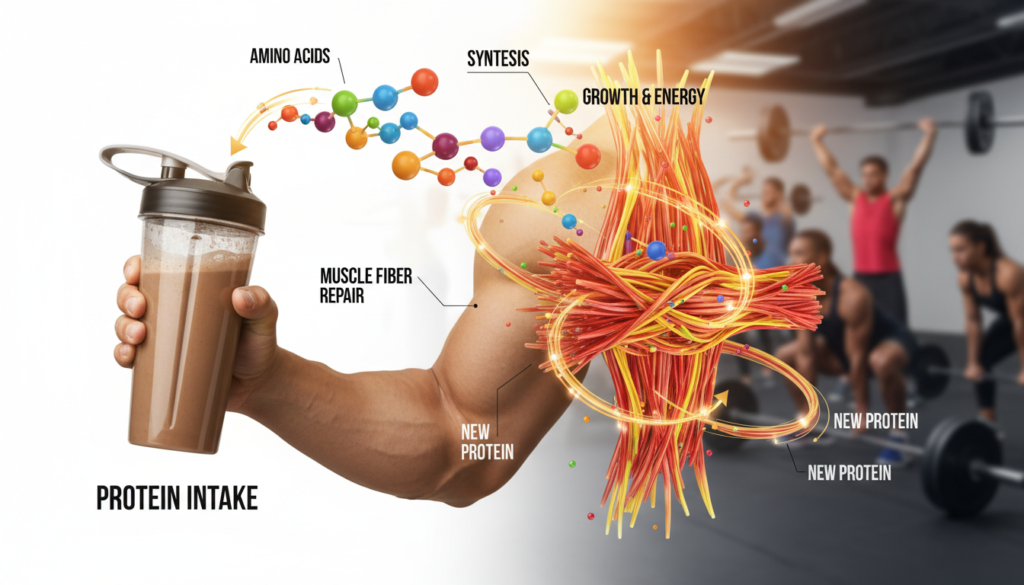
muscle protein synthesis
Why protein matters for muscle repair and growth
Hard workouts cause tiny muscle tears. Your body uses protein to fix these, making muscles stronger over time.
This fixing process relies on muscle protein synthesis. Enough amino acids help your body repair after lifting.
So, strength training protein is a useful tool, not just a trend. Food is effective, and shakes can be helpful when you’re in a rush or not hungry.
What the research says about timing vs total daily intake
Many studies show daily protein intake is more important than when you drink a shake. Timing helps, but can’t replace enough protein on a low day.
Research on whey timing around workouts is mixed. Some see benefits, while others do well as long as they get enough protein daily.
Think about “coverage” instead. Spread protein across meals for steady muscle protein synthesis support, not just one big dose.
How workout context affects timing choice (fed vs fasted training)
Your meal timing before lifting changes things. In fed vs fasted workouts, being “fed” means you’ve had nutrients from a recent meal.
With fasted training, like early morning workouts before breakfast, whey timing is more important. A quick shake after can help bridge to your next meal.
Choose what works for you: a meal you digest well, a shake you can handle, and a plan that keeps daily protein steady with your strength training goals.
Does the “anabolic window” after training really exist?
In many gyms, like those in Casablanca and Rabat, the anabolic window is a big topic. It’s the idea that you need to eat quickly after working out. But, real life isn’t always that simple. What you eat before your workout can affect how you refuel.

anabolic window
Where the 30-minute rule came from
The 30 minute anabolic window idea started because muscles were seen as “like a sponge” after exercise. It was thought that you had to eat protein fast to “lock in” muscle gains.
Some say missing this window means your body won’t use protein for building muscle. This led to the idea that a protein shake after working out is essential, even if you’ve already eaten.
What newer studies suggest about a longer (or flexible) window
Recent studies suggest the muscle recovery window is longer than 30 minutes. It’s now seen as more flexible, lasting up to two hours after working out.
This view also matches how digestion works. Amino acids stay in your blood for a while, thanks to protein in your last meal. So, it’s not about racing against the clock. It’s about fitting protein into your daily routine.
Practical takeaway: what to do if you can’t drink a shake right away
If you can’t get a protein shake right after working out, don’t worry. Think in terms of meals, not minutes. It’s better to have steady protein throughout the day. Then, fit in post workout protein when it works for you.
- Pack a simple option like a shelf-stable shake or yogurt for the commute.
- Use normal food if it’s easier: eggs, milk, sardines, chicken, lentils, or a tuna sandwich.
- Plan your next meal so you support muscle recovery without feeling rushed.
Before vs after workout: what studies show and what to choose
Choosing between protein before or after a workout can be tough. The best choice is often the one you can stick to every week. This helps match your workout timing to your daily routine in Morocco, whether it’s after work or in the morning.
Key study snapshot: 25 g whey before vs after with 10 weeks of training
A study on whey protein involved 21 men. They were split into two groups. Both groups took 25g whey, but at different times.
One group drank it before training, like a pre-workout shake. The other group had it after. They did full-body training three times a week for 10 weeks. This simple plan made it easy to compare the two timing options.
Real-world decision factors: convenience, digestion comfort, schedule
If a shake makes you feel uncomfortable before working out, try it after. Whey protein is fast-digesting, so it works well either way. It depends on how your body handles it.
- Convenience: pick the timing that fits your busy days.
- Digestion: if pre-workout shakes upset your stomach, go for after.
- Schedule: match your shake with when you can eat.
When “after” may be preferable (fasted training, long gaps between meals)
Training on an empty stomach? Protein after your workout is a good choice. A post-workout shake is also helpful when you won’t eat for a while, like during travel or a busy day.
In these situations, 25g whey after your workout can be a practical solution. It keeps your routine simple and supports your habits without adding stress.
How much protein you need per day and how to spread it out
If you train regularly, your diet should be consistent too. Most progress comes from daily protein intake and making smart choices every week.
RDA vs strength-training needs
The RDA is about 0.8 g/kg, but it’s not enough for lifters. A better goal is 1.6 g/kg protein for recovery and muscle growth.
Tracking protein per kg makes your plan flexible, whether you’re in Casablanca or Rabat. Knowing your target makes it easier to meet it with regular meals.
Example calculation and a simple way to hit it
A 150 lb (68 kg) person aiming for 1.6 g/kg protein needs about 109 g daily. You can get this from chicken, fish, eggs, dairy, beans, and lentils. Add more when meals are short.
Don’t want to count all day? Create a routine menu. Use the same breakfast, a similar lunch, and change dinner proteins.
Protein distribution that fits real life
Don’t save all your protein for dinner. Many people eat light breakfasts and then load up at dinner.
A good plan is 3–4 meals every 3–4 hours. Aim for 25–30 g per meal to keep your intake steady without feeling full.
Shakes between meals and around training
Shakes can fill the gap between meals, perfect for busy days. Most powders have 25g to 30g protein per scoop, making it easy to fill gaps without eating a full meal.
- Between meals: use a shake when hunger hits early, so you don’t arrive at dinner starving.
- Near workouts: pair protein with carbs if you want a more complete post-training snack.
Choosing a powder: quick, slow, and plant options
Whey and casein powders differ mainly in digestion speed. Whey is quick, while casein is slow, fitting better before long breaks.
Egg white powder is in the middle for digestion but is often pricier. Soy is a complete plant option, and blends like rice and pea can provide essential amino acids without dairy.
Safety notes to keep in mind
For healthy adults, high protein diets are usually safe when coming from normal foods and supplements. But, those with kidney disease or advised to limit protein should be cautious.
Bone health is also a concern. Higher protein diets can be good for bone health with resistance training. If you have health concerns, talk to a doctor before increasing your protein intake.
Conclusion
The best time to take protein is not as complex as fitness ads suggest. Studies show that pre and post workout protein lead to similar gains. What really matters is meeting your daily protein goal with quality meals.
Protein shake timing is more flexible than the old 30-minute rule. A shake after training is convenient but not essential. For many, getting protein within two hours supports recovery and muscle repair.
When picking a powder, think like a consumer, not a scientist. Whey is best for quick digestion before workouts. Casein digests slower, great for night. Egg protein is in the middle, and soy or rice/pea blends are good for plant-based diets.
For most healthy adults, more protein is safe and may even help bones with smart training. Use shakes to supplement, not replace, real food. Always watch your total protein intake. If you have health conditions, talk to a doctor before increasing your protein.